
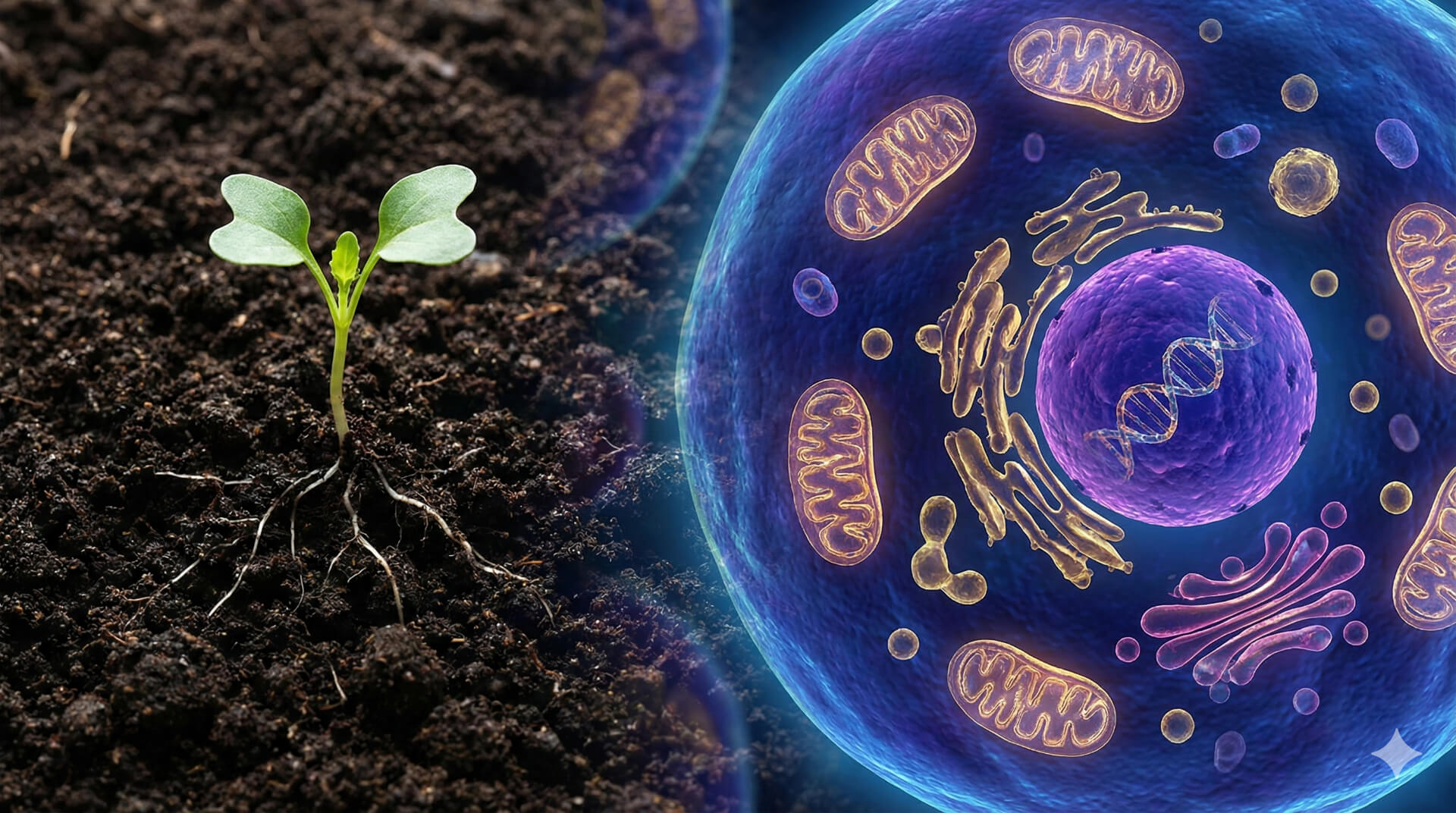
Carbs spark more drama than they deserve. The truth is simple: they aren’t “good” or “bad”—they are signals. While we’re busy counting calories, our bodies are actually reading architecture.
This is the soil-to-cell connection. We’re breaking down how everything from soil quality and food structure to your kitchen tools influences your energy, your cravings, and your health.
This is Part 2 of the Eat Clean Series. If you haven’t already, start with Part 1: The Foundations of a Healthy Diet, where we cover the three roles of food — energy, structure, and communication — along with everything you need to know about protein and fats. Once you’ve got that foundation, come back here to explore carbs, the food matrix, and the soil-to-cell connection.
The Essentials
- The Food Matrix: Why the physical “architecture” of a carb determines whether you feel energized—or hit a mid-afternoon crash that drives hunger, snacking, and gradual weight gain.
- Soil to Cell: How the health of the soil and the life of an animal translate into the inflammatory signals in your body.
- The Kitchen Audit: Simple shifts in how you store, heat, and arrive at your meals to protect your metabolic health.
Carbohydrates: Energy, Fibre & Antioxidants
Carbohydrates are our body’s primary source of fibre and polyphenols—and it’s their physical structure, not their calorie content, that largely determines how they affect energy, appetite, weight gain and inflammation.
Intact carbs: vegetables, fruit, legumes, tubers—arrive wrapped in fibre, water, micronutrients, and natural structure. You have to chew them. Their glucose is stored inside intact cell walls, so it releases slowly, keeping energy steady and cravings in check.
Refined carbs: flours, juices, syrups, puffed cereals—have been taken apart and rebuilt in ways your metabolism isn’t designed to handle well. Without fibre and structure, sugar absorbs quickly. You get quicker spikes, sharper crashes, and stronger hunger signals leading to weight gain. Even when fibre is “added back,” it doesn’t recreate the natural matrix that keeps sugar locked inside intact plant cells.
This difference—structure vs. no structure—explains why some carbs support fullness and others drive constant snacking and weight gain.
Fibre: The Underrated Daily Medicine
Fibre is quietly one of the most powerful tools you have for metabolic health, gut health, hormones, and inflammation.
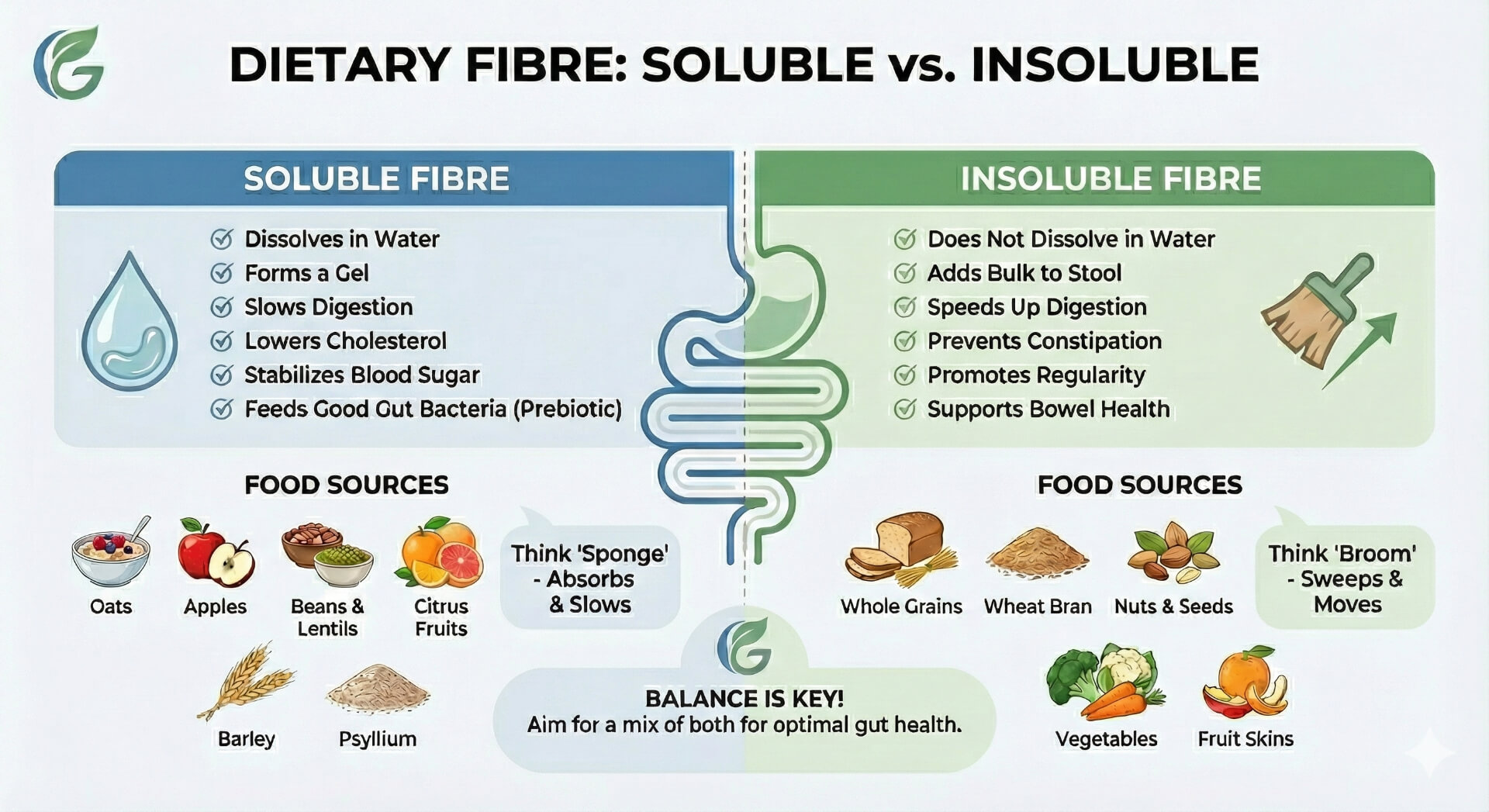
- Soluble fibre (oats, barley, beans, lentils, apples, citrus, flax, chia): Forms a gentle gel in the gut. It slows digestion, smooths blood sugar, feeds beneficial bacteria, and binds bile acids—including cholesterol—so more gets carried out instead of recycled.
- Insoluble fibre (vegetable skins, nuts, seeds, whole grain husks): Adds bulk and movement. It stretches the intestinal walls and triggers the muscular waves that keep things regular.
- Resistant starch (cooked-and-cooled potatoes, rice, oats, pasta): Behaves like fibre and bypasses your small intestine, becoming fuel for the microbiome.
Your microbes transform all these fibres into short-chain fatty acids (SCFAs), especially butyrate, which strengthens the gut lining, lowers inflammation, and communicates satiety to the brain.
Polyphenols: Carbs’ Hidden Strength
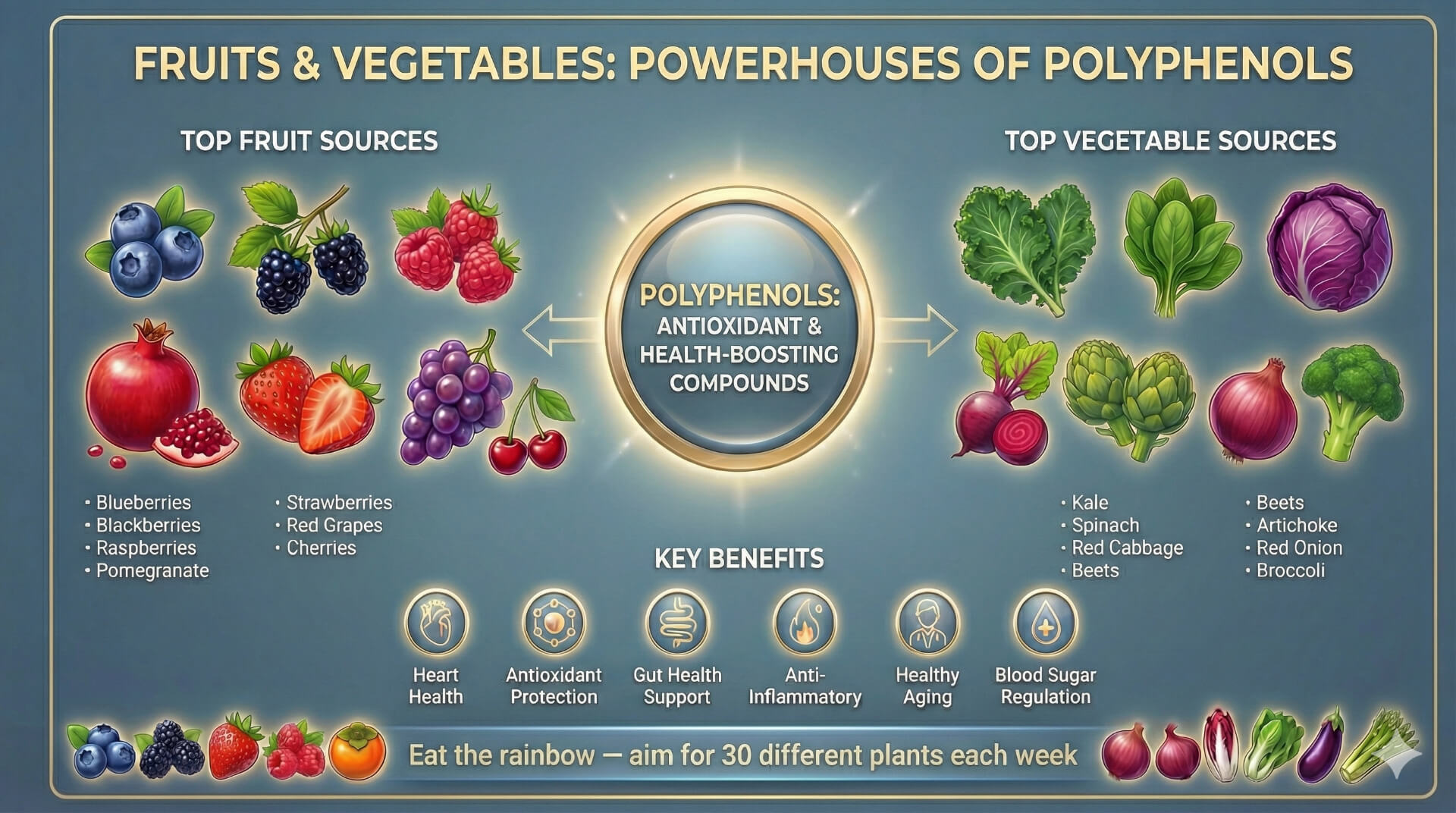
Colourful plant foods carry polyphenols—the compounds that give berries their blues, cherries their reds, kale its deep green. Plants make them as protection; we eat them for the same reason.
Polyphenols help reduce oxidative stress, support microbiome diversity, and modulate blood sugar. Many travel all the way to the colon, where they act as food and signalling molecules for your microbiome. This is part of why colourful, plant-rich diets consistently support longevity and metabolic stability.
Try This With Your Carbs
- Trade Starch for Density: Legumes and berries have a much higher fibre- and polyphenol-to-starch ratio than grains. Their fibre and polyphenols act as a metabolic brake—helping regulate hunger hormones, stabilize blood sugar, and reduce overeating over time.
- Keep Starch Intact + Pair It Well: Treat grains as a side dish, not the base. Avoid overcooking and let pasta or rice cool to boost resistant starch—then pair with lots of protein, fibre and healthy fats to soften the glucose rise.
- Go “Just-Ripe”: A slightly green banana has more gut-friendly starch and less immediate sugar than a spotted one.
From Soil To Cell: Why Quality Starts Before The Plate
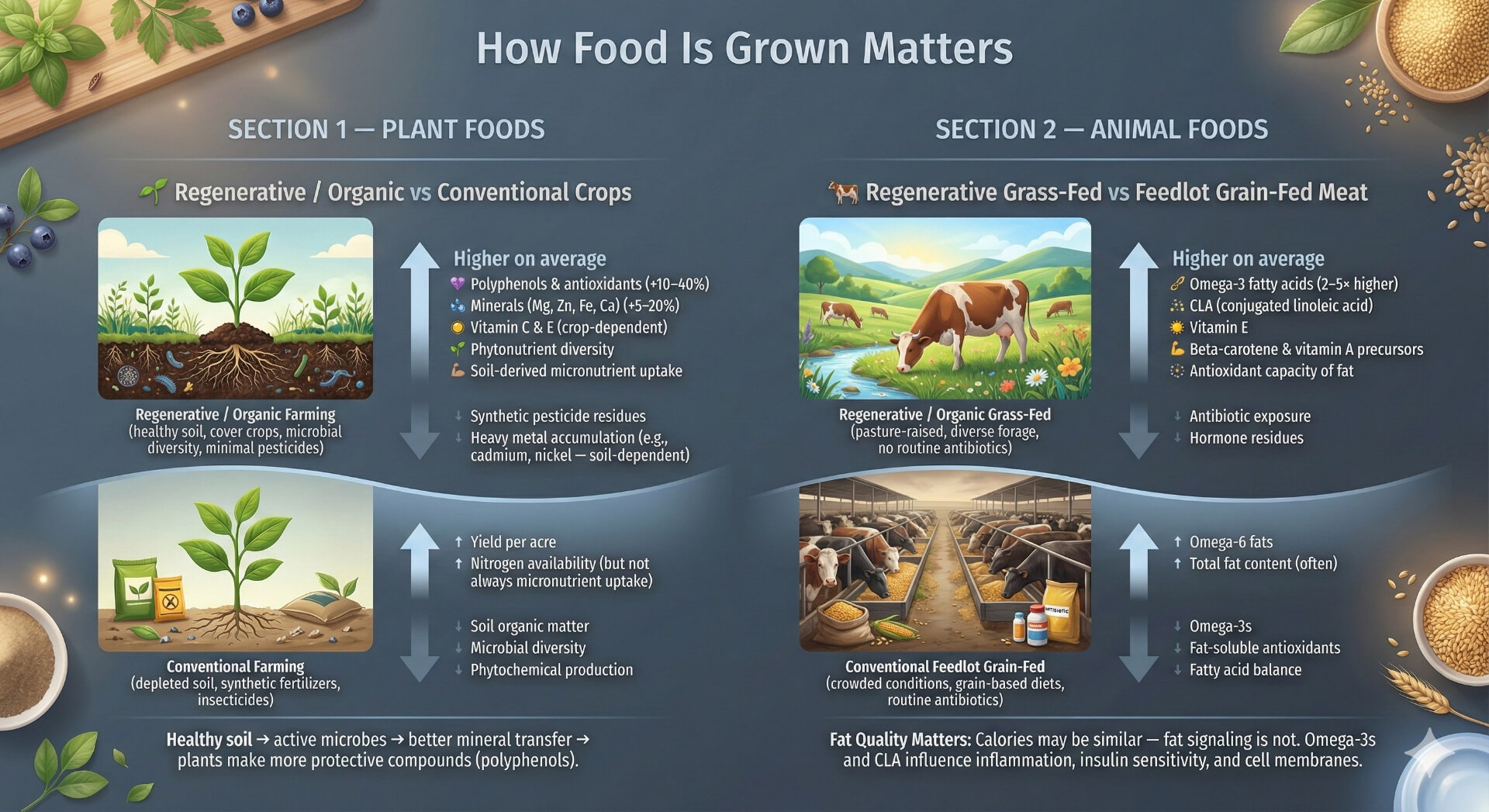
Two identical plants can grow into completely different foods depending on their environment. Plants rely on a soil microbiome, much like we rely on a gut microbiome. Healthy soil tends to grow crops richer in micronutrients and phytonutrients—the protective compounds plants make to survive stress.
Animal foods follow the same pattern. What an animal eats and how it lives show up in the fat composition, nutrient density, and inflammatory signals of the food it becomes.
- Grass-fed, pasture-raised animals produce better fats (more omega-3s and CLA), more fat-soluble vitamins, and fewer stress-related signals.
- Routine antibiotics add unnecessary metabolic “noise” for humans and the environment and can damage your microbiome.
- In seafood, small, wild fish (sardines, herring, mackerel, wild salmon) tend to be richer in omega-3s and lower in accumulated toxins.
Quality Shifts After Harvest
Freshness is a spectrum—and nutrients change the longer food sits after harvest.
- Best: local, in-season produce — the closest thing to “picked and plopped in your mouth.”
- Next: plain frozen vegetables and fruits which are frozen soon after harvest and often retain more nutrients than “fresh” produce that spent weeks in storage.
- Then: simple canned foods — tomatoes, beans, lentils, fish in olive oil or water — ideally in BPA-free linings.
- Dried beans and lentils remain inexpensive, high-fibre staples for your pantry.
- And growing even a small pot of herbs reconnects you with what “fresh” truly means.
From Soil To Cell: Try This
- Upgrade Your Protein: Choose pasture-raised or grass-fed meat. They contain fewer inflammatory signals than factory-farmed alternatives.
- Reduce “Metabolic Noise”: Opt for labels like “no added hormones” or “antibiotic-free” to keep environmental stressors out of your biology.
- Favour the “Small Swimmers”: Aim for 2–3 servings of sardines, mackerel, or wild salmon each week.
- Honour the Whole Animal: Use bones and cartilage for broths; they are rich in calcium and collagen—essential “structural” communication for your joints and skin.
- Think “picked or frozen,” then canned: Keep plain frozen produce and simple canned tomatoes, beans, and fish -and dried lentils-as pantry allies.
- Grow one thing: A pot of herbs or greens on the windowsill subtly resets your relationship with fresh food.
Processed Vs. Ultra-Processed: What To Limit & Why
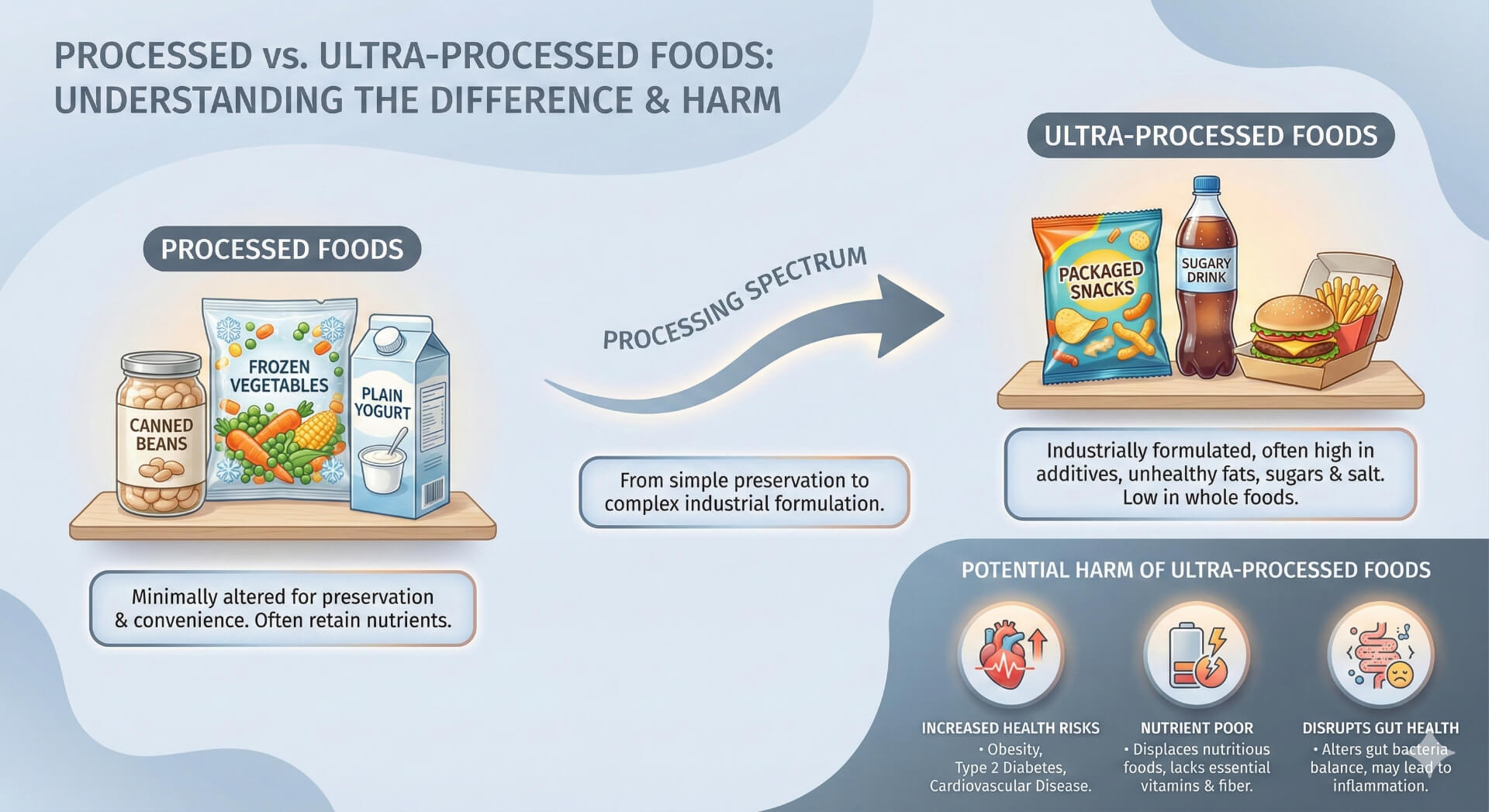
In the ’80s and ’90s, Big Tobacco bought major food companies and brought the same engineering mindset: optimize taste and “repeat purchase,” not satiety or nutrition. The result was a wave of ultra-processed foods (UPFs) designed to be addictive.
Minimal processing (yogurt, cheese, oats, nuts, seeds, canned fish, olive oil) keeps the food recognizable. Ultra-processed foods are different. They rely on refined starches, added sugars, cheap oils, protein isolates, and gums—ingredients few people cook with at home. UPFs are engineered to bypass natural fullness signals keeping you coming back for more.
Try This With Ultra-Processed Foods
- The Home-Kitchen Test: If you wouldn’t (or couldn’t) stock the ingredients on the label in your own pantry, skip it.
- Upgrade Your Reach: Swap one daily packaged snack for a whole-food alternative—nuts with dark chocolate, olives, or berries with real cream. Once you’ve got that, keep going and swap another.
Quick Resource
Want to put this into practice? Download the Stable Energy Guide — a printable PDF with the Eat Clean Plate method, kitchen checklists for your pantry, fridge, and freezer, sample meals, and the 7 habits that shape your metabolism. Perfect for posting on your fridge or referencing when you meal plan.
Beyond The Plate: How To Treat Your Food
- Heat wisely: Charred food and old fryer oil create AGEs ( advanced glycation end products)—compounds that accelerate aging. If you grill, aim for golden, not black. Favour steaming, simmering, poaching, or slow-roasting.
- Upgrade the kitchen environment: Use glass, stainless steel, or ceramic for storing and reheating. Choose wooden or silicone utensils. Use stainless steel or cast iron for cooking—stable and microplastic-free.
- Arrive at the meal: A body that’s rushing, scrolling, or stressed is not in rest-and-digest mode. Presence changes everything—including how your body uses the food you’ve worked so hard to choose.
Beyond The Plate: Try This
- Ditch the Plastic: Store and reheat in glass to keep microplastics out of your metabolic loop.
- The Five-Second Shift: Take one slow, deep breath before you eat. It shifts your physiology, improves digestion, and strengthens satiety signals.

The 60-Second Recap
- Structure is Signal: Your body reads the “architecture” of food to determine satiety, not just the calorie count.
- Fibre is Medicine: Use a mix of soluble, insoluble and resistant starch to fuel your microbiome and blunt glucose spikes.
- Quality Starts Early: Healthy soil and pasture-raised environments create foods with fewer inflammatory signals.
- The Kitchen Audit: Swap plastic for glass and “charred” for “golden” to protect your metabolic health.
Your food fuels you, repairs you, and communicates with every cell. Eat clean, with intention. Let each choice guide you back toward health.