
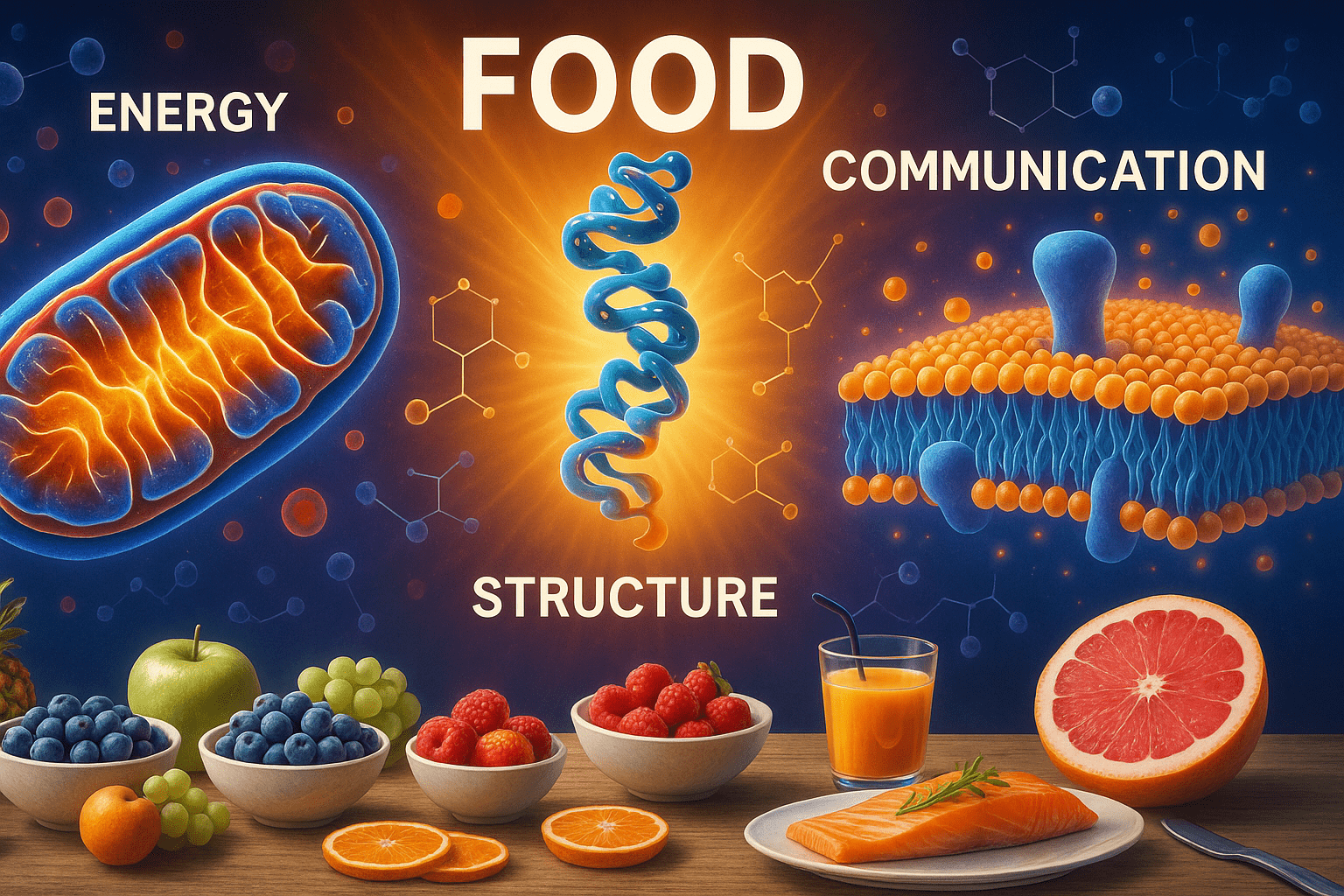
Discover the universal principles of nourishment — from soil-to-cell.
Somewhere between buttered coffee and green-juice cleanses, the meaning of healthy eating got lost. But beneath the trends, healthy eating rests on a few timeless principles.
Eat Clean brings you back to those roots. It’s not about restriction or perfection — it’s about understanding how food fuels your energy, builds your structure, and communicates with your cells. Once you grasp that, eating well becomes simpler and far more satisfying.
What You’ll Learn
- Energy — how food powers your mitochondria
- Structure — how protein rebuilds your body
- Communication — how fats shape cellular signals
- Protein — how much you need and where to get it
- Fats — which fats help, which harm
The Roles of Food — Energy, Structure, and Communication
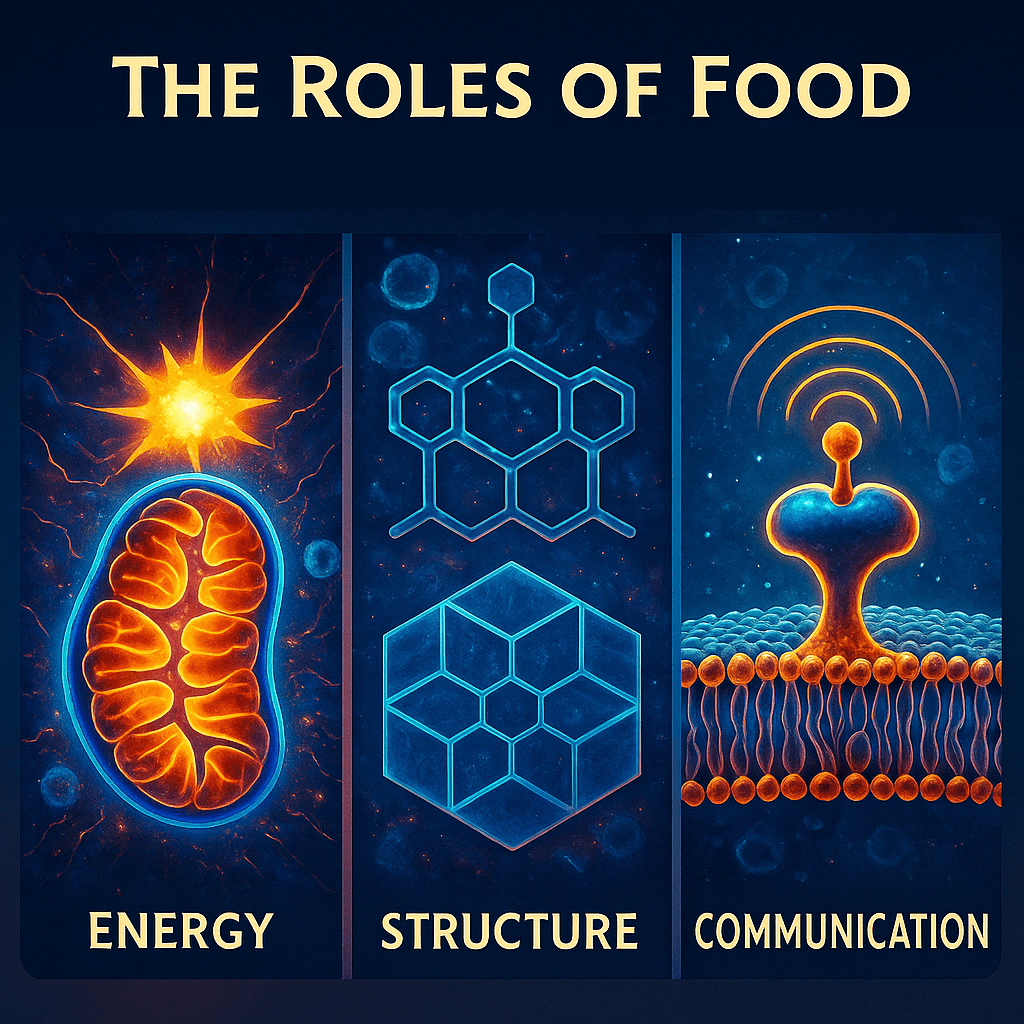
Food is a biological language. Each meal changes how your cells function: the energy they make, the tissues they build, and the signals they send to your immune system, hormones, and brain.
Understanding these roles helps you move past “good vs. bad foods” and toward how food actually supports your biology.
Food as Energy — Powering Vitality
Mitochondria turn food into ATP — the energy that runs your life. When food comes with antioxidants, minerals, vitamins, and natural structure, energy production is clean and steady.
When the input is low-quality — ultra-processed foods, reheated fryer oils, pesticide residues — energy production sputters, oxidative stress rises, and fatigue becomes familiar.
Your energy isn’t about willpower.
It’s about fuel quality.
Pro tip: Afternoon crashes are often a mitochondrial supply issue, not a motivation issue.
Food as Structure — Building the Body You Live In
Your body rebuilds itself daily using the materials you provide. Protein supplies the building blocks for muscle, enzymes, hormones, immune cells, neurotransmitters, and collagen.
Complete proteins — with all essential amino acids plus nutrients like B12, iron, and zinc — support smooth building and repair. When even one amino acid is missing, rebuilding slows.
Pro tip: Prioritize complete proteins; if plant-based, pair legumes + grains intentionally.
Food as Communication — Talking to Your Cells
Cell membranes are mostly fat. The fats you eat shape:
• membrane flexibility
• how hormones dock
• which signals get through
• how nutrients move
• how reactive your immune system becomes.
Healthy fats (olive oil, avocado, nuts, seeds, omega-3 fish, pastured animal fats) create flexible, intelligent membranes.
Damaged fats (reheated oils, trans fats) create stiff, leaky membranes that distort communication, diffuse immune signalling and trigger inflammation.
Pro tip: Choose foods that signal repair and calm, not defense and inflammation.
Macronutrients — The Building Blocks of Life
Protein, fats, and carbohydrates are the 3 macronutrients and each plays a distinct role. Most of us learned to fear one and glorify another, but biology is contextual — not moral.
Understanding what each macronutrient does lets you eat functionally, not fearfully.
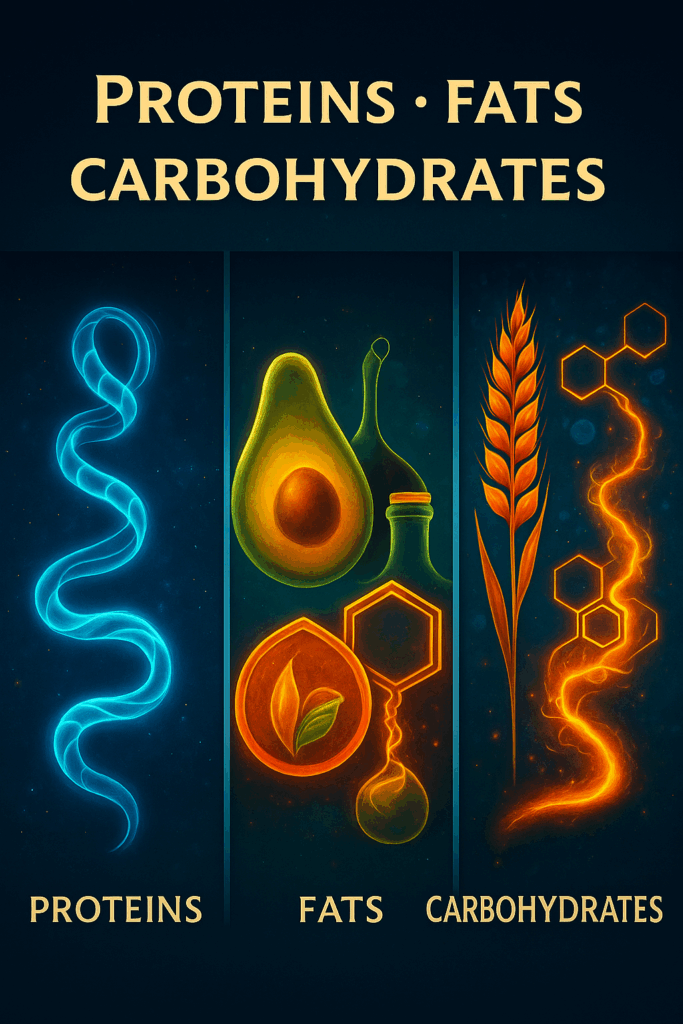
Protein — Structure, Signaling, and Strength
Protein underpins nearly every biological process: enzymes, hormones, immune cells, muscle, bone, and connective tissue.
Amino Acids: The Alphabet of Life
Proteins are built from amino acids. Your body can make 11, but nine must come from food.
If even one is missing, protein synthesis pauses — which is why completeness matters.
Protein Sources: Complete vs. Incomplete
Animal proteins (eggs, fish, pastured meats, dairy) are complete and naturally bundled with B12, zinc, iron, and highly absorbable amino acids.
Plant proteins often need pairing (legumes + grains) but support microbiome diversity.
Pro tip: Build meals around a complete protein — or pair plant sources intentionally.
How Much Protein Do You Really Need?
Blue Zones average ~0.8–0.9 g/kg/day, but many modern adults benefit from 1.2–1.6 g/kg/day, especially with higher stress, more sitting, poor sleep, metabolic dysfunction, or midlife muscle loss.
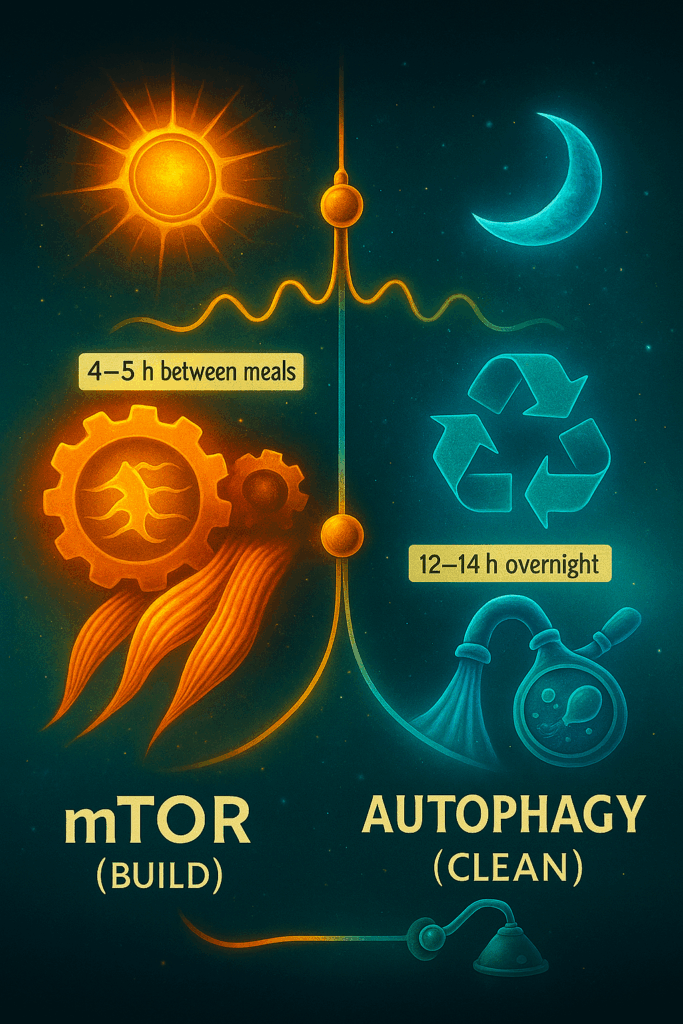
mTOR and Autophagy: Growth and Repair in Balance
Your cells need time in both states:
• mTOR (fed state): growth, repair, muscle building
• Autophagy (fasted state): cleanup, recycling, renewal
Constant grazing keeps mTOR on and autophagy off — accelerating aging and inflammation.
Regular mealtimes — and a 12–14-hour overnight fast — restore the balance.
Protein and Appetite
Protein releases fullness hormones (GLP-1, PYY, CCK) and lowers ghrelin, the hunger signal.
A protein-rich breakfast steadies blood sugar and reduces cravings for hours.
Pro Tips for Protein Efficiency
- Eat meals, not snacks — leave 4–5 hours between meals. 12-14 hours overnight fast.
- Start strong — 25–35 g protein at breakfast boosts satiety
- Aim for 1.2–1.6 g/kg/day
- Mix animal + plant proteins
- Listen to feedback.
- – Too little → fatigue, hair thinning, cravings, slow healing
- – Too much → bloating, heaviness
- Exception: Brief grazing may help with low appetite, early pregnancy nausea, reactive hypoglycemia, frailty, illness/GI recovery, or long endurance sessions — use protein-forward mini-meals and return to regular meals when able
Quick Resource
Want to go deeper? Download the Protein Source Guide — a quick-reference PDF comparing animal and plant proteins, their benefits, nutrient highlights, and pairing strategies. Perfect for keeping on your phone when shopping or meal planning.
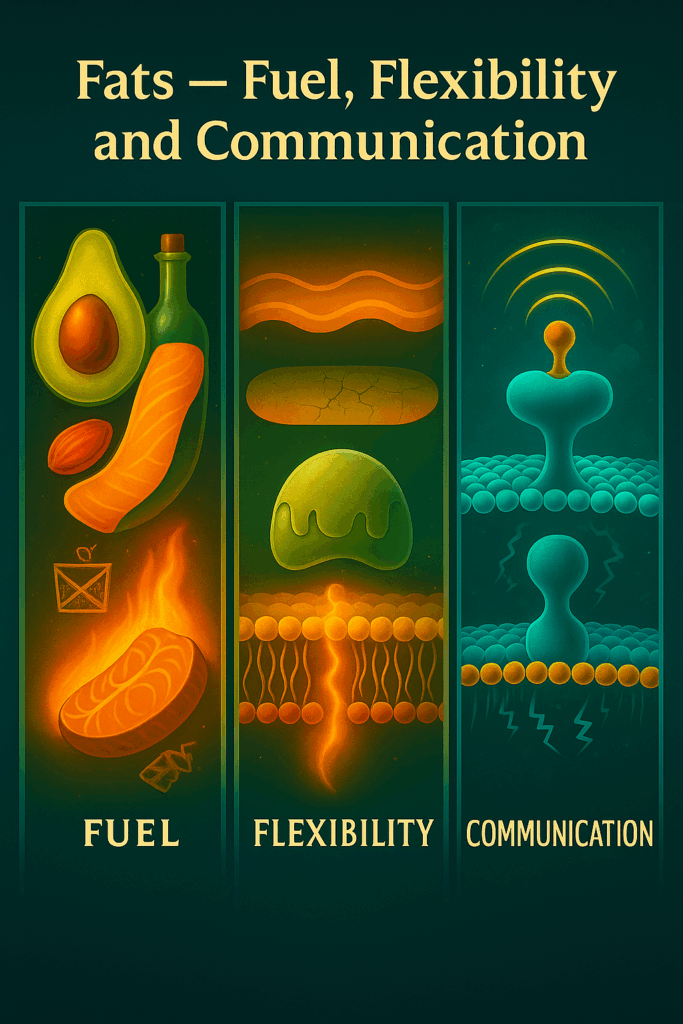
Fats, Fuel, Flexibility and Communication
Fat supports energy, hormones, brain health, immunity, and cell communication.
Fat as Fuel — Energy That Last
Carbs are kindling; fats are the slow-burning logs.
Clean fats (avocado, olive oil, nuts, seeds, omega-3-rich fish, pastured animal fats) provide smooth energy.
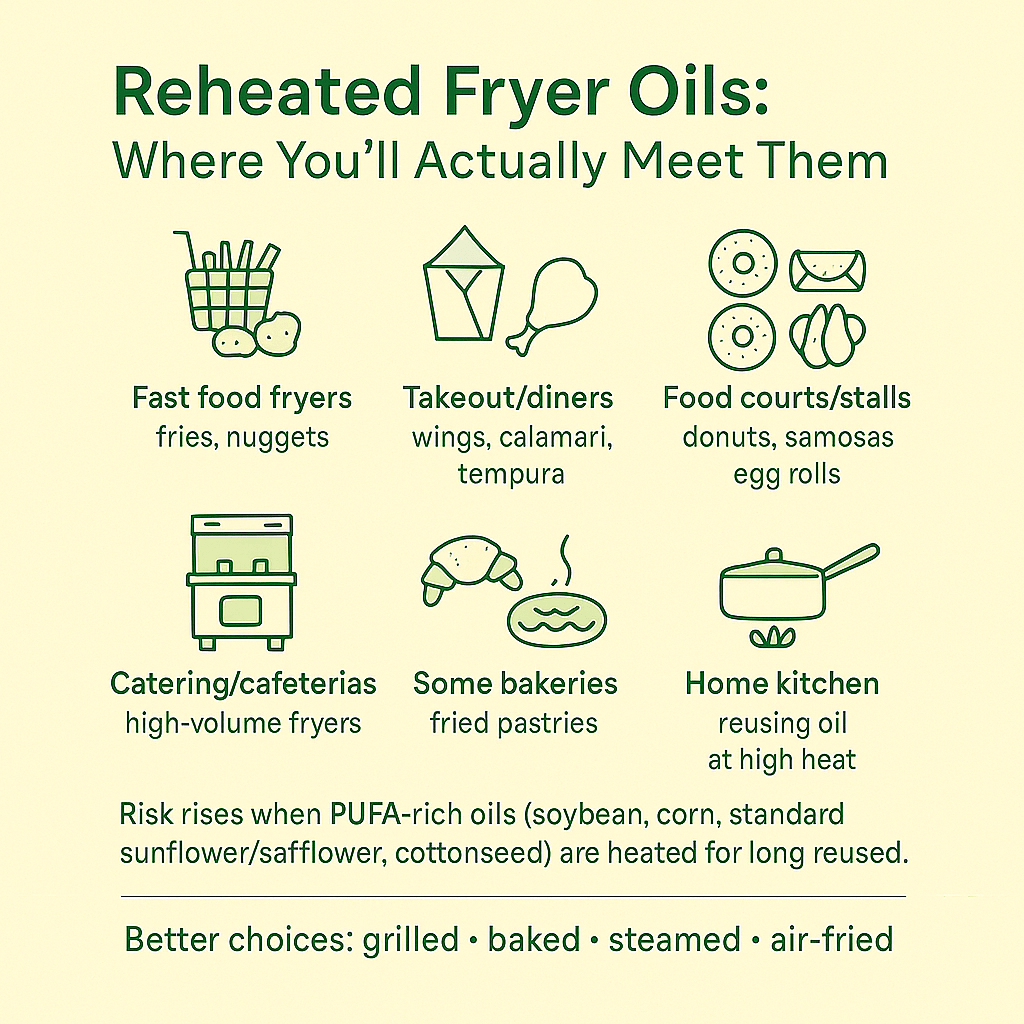
Damaged fats (reheated oils, fried foods, oxidized seed oils) create oxidative stress — metabolic “smoke.”
Pro tip: Energy crashes often reflect fuel quality, not lack of discipline.
Fat as Communication — Building Flexible, Intelligent Cells
Your cell membranes rely on dietary fat for structure and function.
Healthy fats—omega-3s, olive oil, and pasture-raised animal fats—build soft, responsive cell membranes that let hormones and nutrients flow.
Damaged fats—trans fats and reheated fryer oils—make membranes rigid and leaky, slowing communication and disrupting immune signals.
Your immune system scans these membranes constantly. Clear signals support healing; distorted signals trigger unnecessary inflammation.
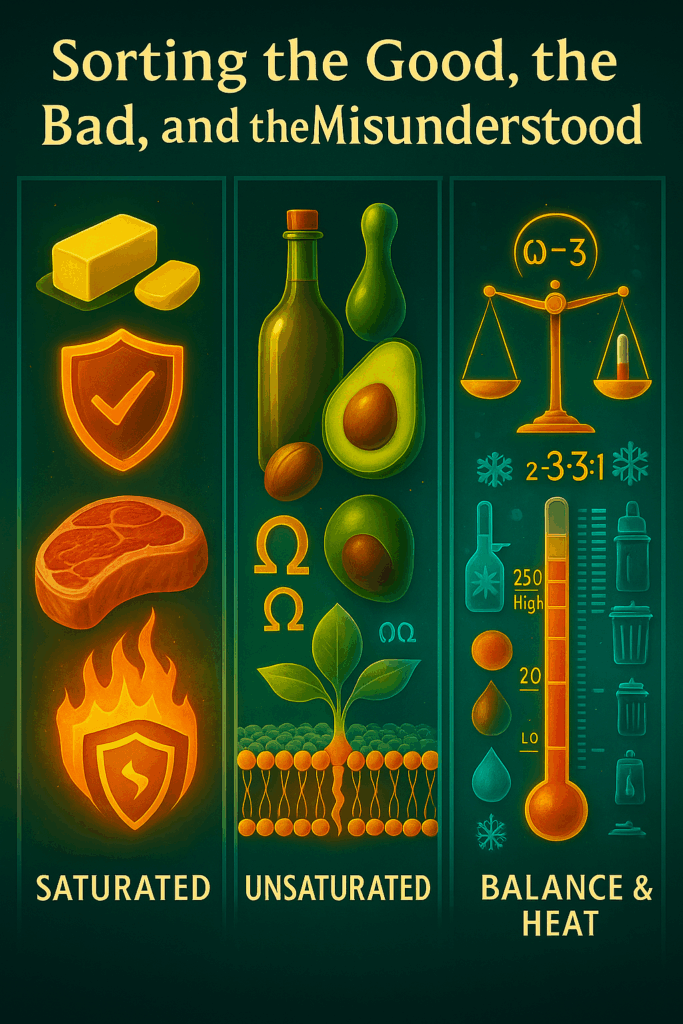
Types of Fat — Sorting the Good, the Bad, and the Misunderstood
Saturated Fats — Stable and Steady
Naturally heat-stable. Found in butter, ghee, coconut oil, and pastured meats.
Their health effects depend on context and overall dietary pattern — quality matters more than blanket avoidance.
Unsaturated Fats — The Flexible Communicators
Unsaturated fats have one or more “open” bonds, making them more fluid — and more vulnerable to oxidation. These include:
- Monounsaturated fats, found in olive oil, avocados, and macadamia nuts — heart-friendly, anti-inflammatory, and stable enough for low-to-medium-heat cooking.
- Polyunsaturated fats, which include omega-3s and omega-6s — essential because your body can’t make them.
Omega-3 and Omega-6: A Delicate Balance
Omega-3s calm inflammation; omega-6s help activate it — both essential, but only in balance.
Modern diets sit around 15:1 instead of the ideal ~2–3:1, pushing the body toward a pro-inflammatory state.
The fix: Choose nuts and seeds for omega-6, cut industrial seed oils, and increase omega-3-rich foods.
When Fats Go Bad:
Fats break down with too much heat, air, or light, forming compounds that drive inflammation.
Match the fat to the heat and store it well.
Approximate smoke points:
• Ghee / clarified butter / coconut oil: 200–250 °C (390–480 °F)
• Avocado oil: up to 250 °C (≈480 °F)
• Extra-virgin olive oil: 160–190 °C (320–375 °F)
• Flax / walnut (unrefined): ~110 °C (≈230 °F) — keep cold
Practical rules:
• Store oils cool, dark, sealed
• Buy small bottles; use within 1–3 months
• Prefer dark glass
• Discard oils that smoke or smell painty/fishy
• Never reuse fryer oil
Bottom line: Treat oils like fresh food — and match fat to heat.
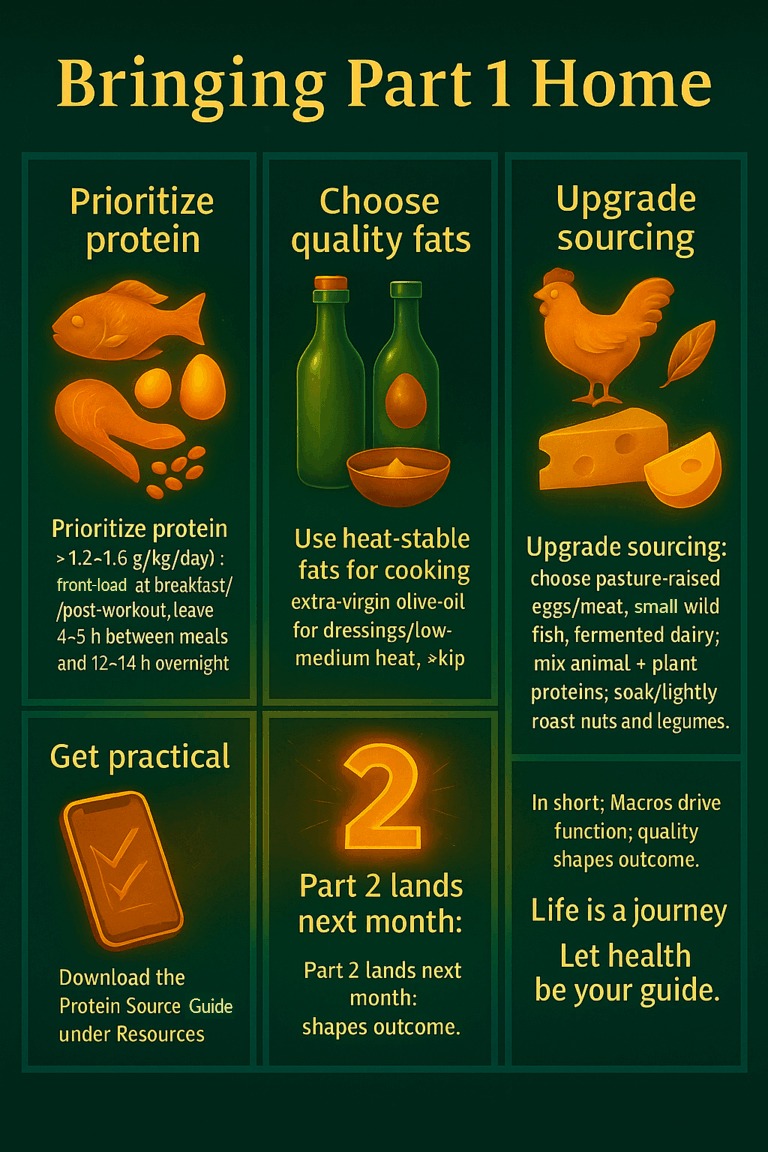
Bringing Part 1 Home
You don’t need a new diet-you need a foundation.
This week, try:
- Prioritizing protein at breakfast
- Using olive oil for low heat, ghee or avocado oil for high heat
- Choosing pastured eggs, grass-fed meats, small wild fish when possible
- Building meals around protein + colourful plants + healthy fats
- Leaving 4–5 hours between meals and fasting 12–14 hours overnight
- Grabbing the Protein Source Guide under Resources and keep it on your phone for shopping and meal planning.
Ready for Part 2?
Now that you understand how food fuels, builds, and communicates with your cells, it’s time to go deeper. In Part 2, we explore carbs without the crash, why the food matrix matters more than calories, the soil-to-cell connection, ultra-processed foods, and kitchen habits that quietly amplify every good choice.
Continue to Part 2: Soil to Cell — Why Food Structure Matters More Than Calories
Life is a journey. Let health be your guide.
References
- Astrup A, et al. Saturated Fats and Health: A Reassessment and Proposal for Food-Based Recommendations. Journal of the American College of Cardiology. 2020;76(7):844–857.
- Hall KD, et al. Ultra-Processed Diets Cause Excess Calorie Intake and Weight Gain: An Inpatient Randomized Controlled Trial. Cell Metabolism. 2019;30(1):67–77.
- de Cabo R, Mattson MP. Effects of Intermittent Fasting on Health, Aging, and Disease. New England Journal of Medicine. 2019;381(26):2541–2551.
- PROT-AGE Study Group. Bauer J, et al. Evidence-Based Recommendations for Optimal Dietary Protein Intake in Older People. Journal of the American Medical Directors Association (JAMDA). 2013;14(8):542–559.
- Moon J, Koh G. Clinical Evidence and Mechanisms of High-Protein Diet for Weight Loss. Nutrients.2020;12(9):E2670.
- Simopoulos AP. The Importance of the Ratio of Omega-6/Omega-3 Essential Fatty Acids. Biomedicine & Pharmacotherapy. 2002;56(8):365–379.